Showing posts with label ethical diving. Show all posts

Friday, November 1, 2013

A Wicked visit to the Baan San Fan Orphanage


Hello everyone, and Happy Halloween :)


We have been having all sorts of fun here in Khao Lak and out at the Similan Islands. The beginning of the season is truly off to a great start. If these past 2 weeks are any indication of how the rest of the season will be going, man oh man are we in for a treat! Incredible diving conditions, beautiful weather (especially considering it is still technically the tail end of monsoon season) a few special guest appearances by a Manta Ray and a Whale Shark, as well as having lots of fun with our guests who have come from all corners of the globe to spend some time with us.

The Divemaster Trainee's that are here with us right now have been very eager and excited to get involved with some of our local community projects, and 2 days ago they had the opportunity to come out and spend a day at the Baan San Fan Orphanage with us. The following article has been written by DMT Beth Hird.

Our Visit to Baan San Fan Orphanage


Arriving by truck at the orphanage, we were greeted by about 25 people, several adults and many children, lots of smiles, handshakes and hugs! Sam and Kai, a couple who run the orphanage, welcomed us warmly. Dai explained that the children range in age from 1 1/2 years old to 17 years, and that a Swiss man had purchased the land after the tsunami in order to create an orphanage for the many stranded children. He also provided funding until his death this past year. We were excited to have a chance to visit, and to do an art project with Simon, and the children seemed excited by our visit and the anticipation of a project.

Simon, a photographer and artist, immediately produced a huge stack of photos, and spread them out all over the 2 large tables, while demonstrating how to cut them up and collage them with glue onto A1 sized colored construction paper. The kids immediately took to the project, cutting up the photos and sometimes even the paper itself, with shapes of hearts and squiggles and swirls. As each child finished one, they would hold it up to show all of us, delighting in the finished artwork. Even the DMT's were invited to make a collage, and the children were also invited to use Simon's Nikon camera to take photographs of the process. Great fun!

Later, Sam took us on a tour of the grounds, where we saw cottages, and a larger building where the organic, soaps, shampoos and conditioners were made. Further on we visited the chickens, which provide all the eggs for the Wicked Diving live aboard trips. The chickens were housed in a huge structure with plenty of space to run around in. Sam explained that the water in the system was created by digging up a whole small banana plant, cutting it into fine pieces, and fermenting it in a large  amount of water with sugar cane. This liquid was then added at a ratio of 2 tablespoons per 20 litres of water. Apparently the banana plant provides anti-bacterial and anti-microbial protection to the water, preventing the chickens from getting sick. 

Sam also explained that he has a vision of making the entire property a solar energy-run system, where excess energy could be sold back to the current energy providers. The property already has a methane producing system run from decomposing compostable materials, and all the food is cooked with this system. The vegetables are also grown on the land, making it a self-sustainable system.

At the end of our visit we got together for a group photo, and then spent a few moments talking with Kai. She says there is room at the orphanage for more children, but until more funds come in, they can't accept the children who are waiting. Truly, it's a great place!

Beth Hird

We had such a wonderful day indeed, and are so grateful to have people like Beth here with us who share common passion for getting involved and helping out the local community as much as possible.


On the ride home from the Orphanage we were all feeling hopeful and positive. We made a pit stop at a bike shop, and left with 5 brand new bicycles! Our intentions are to rent them out to the DMTs and/or Wicked guests who want and eco- friendly, and very affordable way to get around town. We love being

Green :)

Please check out The Baan San Fan Website

Thanks for reading! Stay tuned for more Eco updates in the very near future.

Christa x

-Wicked Diving Thailand

Thursday, October 31, 2013

Wicked Diving named in the Top Ten Wild Asia’s 2013 Inspiring Stories from Destinations


Hard work and high rewards for the dive community

Last week, Wicked Diving was named in the Top Ten Wild Asia’s 2013 Inspiring Stories from Destinations; a prestigious accolade which recognises tourism operators that strive to make a difference through conservation and community projects. Everyone at Wicked was over the moon that the work we are doing in Labuan Bajo has received this great compliment.

Wicked Diving Indonesia runs three core community and conservation projects. The project we were recognised for is a Dive Guide training programme for young men from Komodo island. This project started with Wicked’s sponsorship of the first SSI Instructor course in Labuan Bajo, specifically provided free of charge to local dive guides. Stage two involved mentoring of new divers from Komodo island. Twenty young men were trained to Stress and Rescue diver and then completed month long internships with Wicked. Two of the most promising candidates will embark on their SSI Dive Guide course throughout November and December and then join Wicked Diving on a full time, year long contract when the shop reopens for high season in March.

These young men are being offered an incredible opportunity not only to change their quality of life, but also to learn skills which provide them with an alternative vocation to fishing. Not only that, but it gives the people of Komodo a chance to benefit from the popularity of this area – it’s their natural inheritance, it’s their Komodo.

All of our staff works incredibly hard to ensure the success of this project. This is outside the normal role of a dive guide or instructor. Typically our staff members are already teaching courses, guiding groups of divers or mentoring DMTs. They then take the time to train and mentor these young men and to provide them with the most useful experience that they can. Not to mention the adhoc English lessons and fish ID sessions!

Projects like this don’t come for free. We are lucky to be partnered with Komodo Kita which has funded a large part of the initial training in this programme. In addition, SSI Indonesia has been incredibly generous in d


onating teaching materials to the candidates. Wicked Diving will fund the entire Dive Guide course, including lodging and food for the candidates. This could not be done without you, our guests! 2% of Wicked Diving revenue funds projects like this. Thanks to everyone that has joined us this year; you are helping us to use that 2% to directly change lives.

We’d like to finish by congratulating our friends, Scuba Junkie, who won the Wild Asia Responsible Tourism Award for the 2nd year running. We admire the work they do in the conservation sphere. Everyone involved deserves this award. We hope that this ongoing recognition of the dive industry will inspire many other dive organisations to do the same. Wild Asia’s awards exist to inspire tourism operators and to show them how they can also use their people, their profits and their passion to change the environment around them for a sustainable future.


-Wicked Diving Komodo

Monday, October 7, 2013

Turning school students into divemasters – the next step!


Since August 22nd, Wicked Diving’s team of teachers have been visiting local tourism school, SMKN1 Labuan Bajo, everyThursday. Headed up by Jo, Wicked’s Conservation Manager, and Mei, Wicked’s office superstar and former student of SMKN1, the programme began with a series of lessons focusing on marine conservation.
From threats to the marine environment, to information about how many eggs a turtle lays, we aimed to give students a much broader view of what they can find right on their doorstep in the Komodo National Park. In addition, students were also given an inspirational talk by one of their peers, Marsel, one of Wicked’s divemasters and a Flores local. The aim of these classes was to inspire pride in the local area and give more information about how and why students should aspire to work within the dive industry.
The next stage is interviews. The programme we have prepared is not only theory based. Our intention is to take some of the more promising and enthusiastic students through a series of practical lessons, which will begin with swimming and then see some learning how to dive and working their way through the dive certifications to finally reach Stress and Rescue diver and then ultimately to become SSI Dive Guides. However, with 86 students in the class, it is impossible in our time frame to provide practical training in these areas to all the students to ensure success and further learning. We now begin the difficult task of whittling down these smiling and hopeful students to a smaller number.
We started the interviews on a student by student basis. We were looking for good command of English, ambition and a real desire to work within the dive industry. It’s a really tough job, as many students want to be given this great opportunity. The wonderful thing we realised throughout the initial interview process was how effective our classroom sessions had been. Many students cited a newly discovered love for the underwater environment and for its conservation. We also received lots of feedback which showed that the students had not thought it would be possible to start work within the dive industry and they now understand that it is possible, and also what skills they need to be successful. 
Our goals are two-fold and the swimming lessons will be split into 2 groups. Complete beginners in one group, and those who can already swim in a second. We will provide important life skills to those students who cannot yet swim, as whatever employment they seek in the future, living on an island nation and working in tourism will most likely mean exposure to water, be it swimming pools, waterfalls or the sea. By learning how to swim they can be more confident and safe around the water.
The second group of swimmers will be given an opportunity to improve their skills and demonstrate comfort in the water. It is from this group that we will take students to complete the diving programme.
We have already seen some very promising individuals, some of whom with a real hunger to become dive guides, even some students whose family members work within the industry already. We are looking forward to finishing the interviews in next week’s lesson and then being able to inform students of their successes. One of the really inspiring finding is that so far, we have just as many females as males. Go the girls!
We’ll keep you updated as we continue the programme and even profile some of our candidates on the blog, so you can meet them in person!


Friday, September 6, 2013

The boy from the mountains, who moved to the sea!


The school bell sounded and students took themselves off to their next class. However, there wasn’t the foot dragging that might accompany a journey to a maths lesson or the grimacing the one might expect for English grammar. The students hurried in to class, took their seats and waited expectantly.


The reason? Today was a class with a difference. Today teachers were coming from local dive school, Wicked Diving, to teach them all about the sea.


This year, when the students at SMKN1 returned from their summer break, Wicked Diving took its animated teaching team into the school grounds to contribute to the Travel module, with a programme centering on marine life, conservation and working in diving.


So far students have learnt about the importance of the marine ecosystem, threats to it and to some of the key species within the Komodo National Park, and this week they had a guest speaker. Marsel, who is one of Wicked’s divemasters, from Flores spoke to the class about his life as a dive master.


One of the core principals of the programme is to inspire and motivate the students to look at their dreams and help them to realise what can be achieved. Marsel surely did this as he spoke about being a boy from the mountains, who came to the sea. He couldn’t swim, nor speak English, but with a dream given to him by someone who recognised his potential, Marsel pushed himself to learn these things. He took work on boats and swam every day until he was a strong and confident swimmer. He studied English and tried to take everything from his contact with English speakers, helping him to progress at a fast rate. He then found an opportunity to study diving, resulting in the qualification of PADI divemaster. No mean feat, when you are studying complex physics in a foreign language!


The students were enthralled by his story and the advice he gave them. He is truly a fantastic role model to these students and took the time to explain the difficulties of reaching your goals and also the fact that anyone can do it – not just the boys! No doubt when Marcel becomes an instructor, which is his next dream, he will be back to the school for an update.


Wicked Diving has devised this programme to encourage pride in their country and to foster the wish to conserve it. But it doesn’t stop there. We also want help these students to realise their dreams of becoming snorkel and dive guides. We will work throughout the year with them to provide important swimming coaching to students, many of whom cannot yet swim. For the most motivated and hungry, we will then provide dive training to set them on their way to becoming the next dive guides of Labaun Bajo.


SMKN 1 Labuan Bajo is a tourism school funded in part by the Indonesian government, for students between 15 and 18 years of age. It operates as a vocational facility, aiming to give students a well rounded education and future in the tourism industry. The programme consists of 5 modules – Travel, Hotel, Food and Beverage, Computer 1 (software application) and Computer 2 (hardware).


This is part of what Wicked Diving Komodo does. We try to help improve the community around us and to shape a more positive and sustainable future. When you join us for trips - you are supporting these projects. 2% of all our revenue makes this (And other) programs possible.

When you join Wicked Diving Komodo - you make a difference


Monday, August 19, 2013


Throughout this busy season, at Wicked Diving In addition to this programme, we are also currently hosting 2 interns from Komodo village, located inside the Komodo National Park. Komodo KITA is an organisation which has developed a programme to improve employment options for the local population who live within the park boundaries  – effectively giving the land back to the people. Komodo KITA have taken 20 students who have been all been through a diving training programme and all have reached the level of Stress and Rescue divers. The goal of this programme is to certify these students to Dive Guide level, so they are able to seek employment here in their home.


We are presently hosting Rusdin and Gavfur, both of whom are participating in this programme.  Wicked Diving’s role in this is to allow them exposure to international guests, to improve their  spoken English skills, to increase their number of dives and their comfort levels in the water. Rusdin and Gavfur have been working very hard with us over the last couple of weeks, joining trips on all three of our boats and working closely with our dive guides and instructors.


Wicked Diving strongly believe that we have a responsibility to invest in the local communities in which we work. There’s no better way to have a direct impact than working with the young population. We hope we can provide valuable, life changing experience in our contact and also have a hand in reversing some damaging habits, such as plastic overuse and littering.

Wicked Diving Komodo

Wednesday, August 7, 2013

Wicked Diving Komodo’s newest collection


Ok. We don’t mean to brag, but we are a little excited. We want to show you our new range of coconut shell jewellery which is available to buy in our dive shop in Labuan Bajo.

The range includes handcrafted manta ray necklaces and manta ray earrings, turtle key rings and Komodo dragon brooches. These have all been exclusively designed and made for us by the residents of Komodo island.

We’re particularly excited about them as they have been made for us from coconut, which is widely available and doesn't impact the marine environment. Similar items were available, but they were all taken from shell from the marine park. We loved the designs, but wanted them crafted in a sustainable material.

We have now noticed an increase in the use of coconut from some of the traders within the park. Our guests have the option to buy directly from the local traders and we always recommend purchasing coconut or other sustainable materials. We hope in this way we will see a distinct reduction in the amount of shell on sale.

In addition, purchasing these items on an ongoing basis from the Komodo National Park fishermen, we are offering an alternate source of income to fishing. Win win! We have been lucky that some of the traders have embraced this with an entrepreneurial spirit and hope many more will follow suit.

There are almost 4000 residents in the national park, most of whom make a living from trade in local goods and sales of souvenirs. Wicked is committed to supporting local communities and we are happy to be able to offer these to our guests in the Wicked Komodo shop.


Monday, August 13, 2012

Changing the way Burmese are taught and cared for in Khao Lak


Today I was taken for an informal visit to the brand new FED unified learning center.
 

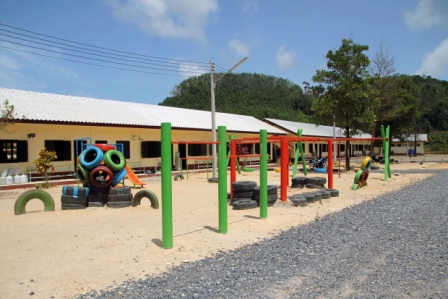
Located just five minutes drive from the main road in Khuk Khak, the facility features two main buildings with classrooms, nursery, canteen, computer room and a huge playground area.


The new learning center is hosting 470 Burmese students from the age of 2 to 17.

 
As part of our Ethical Operations, Wicked Diving was paying the rent of one of the previous learning centers. Not that all centers have been unified in the new facility, and there is no need to pay a rent for it, Wicked Diving has conveyed the same budget into teachers’ salaries. This is the Wicked way to guarantee a level of education to the students to help them to be integrated in Thai high schools or prepare them to fins a job.


During the visit I’ve asked about the 3 students we’ve trained to become divers. They all have find their way in into the work life. One is working in a resort in Phuket, one is assisting acc and one is running his own business inside the learning center, selling snacks to the students and teachers!!!


I had the chance to see and congratulate him. He’s very happy and proud of his new business but assured me that he still likes diving so we’ll definitely have him in the water again next season. He said with a smile that he’s ready to do the advanced course!!!


All in all, I must say it was touching to see all these kids having proper education that otherwise would be difficult to get anywhere else.


Did you know FED (Foundation for Education and Development) has a Facebook page? Follow their activities just by searching GHRE-FED and “like” them. They deserve our attention!!!


Thursday, April 19, 2012

Ocean safe Sunscreen

Wicked Diving operates in places with a great deal of sunshine. That's partly why so many people join us again and again. Our Similan Dive Center is located just 10 degrees north of the Equator in Thailand and out Komodo Dive Center is located 8 degrees South of the equator. A major concern for all our guests and staff should be sun-exposure.
Why is it important to use sunscreen?
Skin damage from sunlight builds up with continued exposure, whether sunburn occurs or not. In addition to skin cancer and sunburn, other effects can include wrinkling, premature aging, and in time, an almost leathery appearance of the skin. Research also suggests that excessive exposure to UV radiation may interfere with the body's immune system.
Sunburn is associated with the shorter ultraviolet wavelengths, known as ultraviolet B (UVB). The longer wavelengths, known as ultraviolet A (UVA), however, can penetrate the skin and damage connective tissue at deeper levels, even if the skin's surface feels cool. It is important to limit exposure to both UVA and UVB.
Sunscreens play an important role in a total program to reduce the harmful effects of the sun, along with limiting sun exposure and wearing protective clothing.
To help consumers select products that best suit their needs, sunscreens are labeled with SPF numbers. SPF stands for "Sun Protection Factor." The higher the SPF number, the more sunburn protection the product provides. Remember, sunscreen use alone will not prevent all of the possible harmful effects of the sun.


Is My Sunscreen Harming Corals?
Coral is a living organism that needs algae for food. Research now shows that certain ingredients in regular suntan lotions activate viruses inside algae. When these viruses replicate, they kill off the algae. Without the algae, the coral dies.
Four main ingredients that harm coral cited in a recent study are: paraben, cinnamate, benzophenone, and camphor. Avoid these ingredients. Some experts also recommend avoiding suntan lotion with anything beginning with "oxy" or "hexa.” Another problem with some sunscreens is that the oil in them can float in the water, blocking sunlight. So try to avoid sunscreen that seems to come off too easily and leave oily residue.
Look for ingredients that say biodegradable, organic or natural or that assert that they are coral safe, reef safe, eco safe or environmentally friendly. Remember, these terms do not guarantee that the product is ocean-safe. You still need to check the actual ingredient list. Look for active ingredients that are thought to be safer, such as zinc oxide, titanium dioxide, and avobenzone. The good news is that these ingredients are probably not only safer for the environment, but also safer for you.
Increasingly department stores and Pharmacies are offering environmentally safe sunscreen.  You can also look in health food stores. For the best selection, look online, the internet has lots of choices and you can read customer reviews before buying.
Ocean-safe sunscreen or sunblock is effective. If it says it offers SPF 30, for example, it will protect you as well as a regular SPF 30.
It is worth noting that biodegradable sunscreen may blend in differently upon application. Some brands work better when rubbed in more slowly as they may congeal when applied too quickly. You may need to experiment to find the best ocean-safe sunscreen for you. Reading reviews on the internet may help you choose.
Apply ocean-friendly sunscreen or sunblock early. If you apply 10 to 20 minutes before you enter the water, the lotion has a chance to absorb into the skin, and less of it will wash off. Rub in slowly but as much as you can. Sunscreen will rub in better than sunblock, which is more opaque. Even environmentally friendly products can contain ingredients that float in the water, blocking sunlight. Coral need sunlight to thrive. So apply early, apply sparingly, and rub in thoroughly.
Wear a rash vest to protect your upper body and shoulders. Only apply ocean-safe sunscreen to areas that will be in the sun whilst snorkeling or swimming, such as your face and back of the legs.
Other personal products, such as antiperspirant, perfume, and body lotion, may also harm the delicate reef eco-system, so do not wear these when swimming in the ocean, especially when near coral.
Even the oil and bacteria in your skin can harm coral, so do your best to never touch coral. Keep fins away as well. If you can't maintain positive buoyancy without touching the coral, then move away to another area or wear a life vest if you are snorkelling.

Stay safe - take care of your skin. Think locally and take care  of the reefs we visit in Thailand and Komodo

Thursday, April 5, 2012

10 Simple things we can all do to help preserve our oceans

Wicked Diving believes that no matter where you live, all of our actions have an impact upon the environment. Even though you may live nowhere near the ocean, it is still important to live as greenly as possible in order to protect the oceans.

The oceans play a vital role in the environment of the planet as it has a moderating effect on the climate, absorbing carbon dioxide and re-distributing excess heat and therefore slowing the warming of the atmosphere due to rising levels of greenhouse gases.

There are actions that we can all take every day that can help to keep our oceans healthy and life sustaining and to protect our planet from further unnecessary degradation:

Reduce Energy Consumption

Carbon dioxide from burning fossil fuels is making our oceans more acidic. One consequence could be the loss of corals on a global scale, as their calcium skeletons are weakened by the increasing acidity of the water. There are many simple ways you can reduce your energy use. Ride a bike, walk or use public transportation. Use high efficiency appliances in your home. Turn off appliances when they aren’t in use. Turn up your thermostat a few degrees in the summer and down a few degrees in the winter. Use compact fluorescent light bulbs in your house.

Buy Ocean-Friendly Products

Avoid products produced through unsustainable or environmentally harmful methods. For example, avoid cosmetics containing shark squalene and jewelry made of coral or sea turtle shell. These products are directly linked to unsustainable fishing methods and the destruction of entire ecosystems.

Reduce Production of Waste, Use Reusable Plastic Products and Recycle

Plastic debris in the ocean degrades marine habitats and contributes to the deaths of many marine animals. Because floating plastic often resembles food to many marine birds, sea turtles and marine mammals, they can choke or starve because their digestive systems get blocked when they eat it. Help prevent these unnecessary deaths use cloth grocery bags and reusable water bottles.
Wherever possible, use and purchase reusable products rather than disposable ones (i.e., razors, food storage, batteries, ink cartridges (buy refill ink), coffee filters, fabric shopping bags and reusable water bottles, etc.).
Create designated holding "bins" for each type of recycled product and place in convenient locations in your home/garage.
Start a compost pile with yard trimmings and food scraps.

Buy Used Products

Buy used products whenever possible. Use sources like, Ebay, Charity shops, Car boot sales, Freecycle.com etc
Simplify your life as much as possible. Only keep belongings that you use on a regular basis. By making the effort to reduce what you own, you will naturally purchase less and create less waste in the future.
Reduce Purchases, in general, think before you buy any product - do you really need it? How did the production of this product impact the environment and what further impacts will there be with the disposal of the product (and it’s packaging materials)? When you are thinking about buying something, try the 30-Day Rule -- wait 30 days after the first time you decide you want a product to really make your decision. This will eliminate impulse buying.
If you only need something temporarily, ask if a family member, friend or neighbor to lend it to you.
Share things like books, magazines, movies, games, and newspapers between family members, friends and neighbors.

Correctly Dispose Of Hazardous Materials

Motor oil and other hazardous materials often end up washing into coastal areas because they aren’t disposed of properly. This pollutes the water and hurts the overall health of our oceans. Be sure to dispose of hazardous waste in an environmentally safe way.

Pick Up Rubbish And Litter

Whenever you are out in public, dispose of your litter correctly, if there are no rubbish bins around, take it home with you and dispose of it there. Much of the plastic and debris found in the ocean has its beginnings in beach litter. As beach crowds increase, so does the amount of rubbish left behind. Don’t let your day at the beach contribute to the destruction of our oceans. Bring a rubbish bag with you for your litter and volunteer regularly for beach clean-ups.

Have a Paper-Free Home

As much as possible, create a paper-free home
Replace paper napkins with cloth napkins
Replace paper towels with a special set of cloth towels/napkins (or cut up old t-shirts for to make alternative towels)
Buy bleach-free, toilet paper that is made from the highest post-consumer waste content you can find (80% minimum).
If you print documents, print on scrap paper or bleach-free, recycled paper with the highest post-consumer waste content available.
Use a digital organizer to compile your to do lists and grocery lists.
Reuse envelopes, wrapping paper, the front of greetings cards (as postcards) and other paper materials you receive wherever possible
Read books, magazines, and newspapers from your local library or online
Create and use note pads from scrap paper.

Use less fertilizer

When fertilizers are used in the garden, close to the ocean, (or other water sources) the excess eventually ends up in the ocean (or water source). One result is a “dead zone” - an area with very low levels of oxygen in the water - during the spring and summer. Since all aquatic life requires oxygen to live, including fish and shrimp, they must flee the area or die. So, use fertilizer sparingly and remember more is usually not better.

Conserve Water

Freshwater degradation is a looming crisis that we must face head on with strong and effective actions. Please do your part to protect this precious resource not just for future generations but for our own future by adopting sustainable water practices. Only 3% of the earth's water is freshwater - and we must protect this critical resource.
Each time you turn on a water faucet use the lowest pressure necessary. Keep the water turned on only while it is needed. For drinking water, keep a pitcher in your refrigerator so you don't have to let water run to cool.
It is estimated that 13.7% of household water is wasted by leaks. Check your water meter when no one is using water in the house. If it's moving there's a leak. A running toilet can waste 2 gallons a minute. Check all appliances for leaks and fix them promptly.
Install low pressure water fixtures throughout the house and don’t forget to turn the tap off while brushing your teeth.
If you really have to water the garden, water at night to minimize evaporation and whenever possible water with leftover or unused water from drinking, cooking, and showering.


Pick up rubbish and litter

Whenever you are out in public, dispose of your litter correctly, if there are no rubbish bins around, take it home with you and dispose of it there. Much of the plastic and debris found in the ocean has its beginnings in beach litter. As beach crowds increase, so does the amount of rubbish left behind. Don’t let your day at the beach contribute to the destruction of our oceans. Bring a rubbish bag with you for your litter and volunteer regularly for beach clean-ups.

-Similan Diving

Monday, April 2, 2012

A new generation of Dive Masters from Burma


A few weeks ago, Wicked Diving started the Open Water course with 3 students from the Foundation for Education and Development (FED) as part of a unique program to train up some of their students to become Dive Guides, which will allow them to find work in the diving industry in Thailand.
After doing their training dives, the final exam was the last hurdle to become certified as SSI Open Water Divers. Although their spoken English is very good and the whole course was done in English, doing the complete exam in a foreign language is not that easy. Unfortunately we don’t have a Burmese translation…..Yet.
Myintzu actually passed the exam without any help and after a thorough oral explanation on all questions, both MMS and ChaiChai passed the exam as well.
In the last few weeks they have joined us on several daytrips to log some more dives and we hope to invite them on one of our liveaboard trips to the Similans or PhiPhi Islands in the near future. They show a great passion for the marine life and we are convinced that they will be great guides one day.
So a big congratulation to Myintzu, MMS and ChaiChai for passing the SSI Open Water course!
Wicked Diving would like to thank the staff for dedicating their time and energy to the course and taking them under their wings.
We would also like to thank Aquamaster Thailand. Since Wicked Diving is a partner center of Aquamaster Thailand, they decided to sponsor the students with their own Aqualung rashguards, masks, fins and snorkels!
Meanwhile, SSI Thailand provides the teaching materials and certification cards for the students. This is mainly sponsored out of the proceeds of the SSI ECOlogical certifications that have been issued in the region, for example on Wicked Diving’s Manta Education Trips. The proceeds of these certifications allow SSI to sponsor local environmental and community projects.
We also wish to extend a huge thank you to you - our guests! Without you, none of this would be possible. 2% of all our revenue goes towards projects just like this. When you dive with Wicked, you make a difference!

-Similan Diving

Sunday, March 18, 2012

Lecture at the FED school


Last week Nina and Our recent Divemaster Graduate, Koen visited the FED School - here is the story of what they did!


"On a sunny Monday morning me and our divemaster Koen headed to Burmese school to give a presentation to the kids about Manta Rays. Our expectations were high. We already heard so many good things about these kids and their ambition to learn more about their surrounding environment. My ambition is the ocean and the incredible creatures that inhabit it. Being given this opportunity to share it with school kids was like a Christmas present. But at the same time I was nervous: these kids really listen. They have spend most of their lifes surrounded by the ocean and fishing industry. Their knowledge and experience on the local ocean is greater than mine but they've never been told how fragile or sensitive it is and how badly it's suffering. So raising awareness in behalf of the Manta Rays and our local reefs was a challenge that I was happy to face.


When we entered the classroom we were greeted by a happy crowd of 22 kids between ages 13 to 18. The welcome was warm and full of anticipation. I opened my presentation by asking the kids how many knew what Manta rays were and how many had seen one. Surprisingly many had seen rays but only a few had seen a Manta and unfortunately a dead one. So when I showed them my first video of Manta Ray playing with the divers on the local dive site they were just blown away. During the presentation the kids were making notes frequently and following my lecture intensively. At the end we did a Manta Ray quiz with and the winner (who got 14 out of 15 points!!!) got a Wicked Diving T-shirt with a Manta Ray on the back.


I went to the school to raise awareness and to show the kids another side of the ocean life. I ended up being educated. The questions and the wonderments the kids had made me think of things in another way and see them from another angle.


Our goal in the community work we do is to try to get the local community involved with the diving industry. We are the foreigner coming to their towns and their culture and using their natural resources. We should give something back to them and also get them participate. And it's not only about giving and taking and us and them, it's working together for the same purpose: to keep our oceans healthy and alive."

Thanks Nina, Koen and all the kids for participating.

A special thanks to each of our guests as well! Without you, none of this is possible. 2% of all our revenue goes to projects like these.


Wicked Diving Thailand

Tuesday, February 7, 2012

Future Divemaster?

In the beginning....

The Open Water Course

Before the start of the course, some paperwork needed to be filled in and we took Myintzu, Chai Chai and Japu to dr Chusak for a medical check-up. All three were confirmed fit to dive so nothing could stop us from getting them in the pool this weekend!

We would like to thank Dr Chusak in Khao Lak for providing a free medical check-up to support the project. It's great to see the whole community helping support projects like this.


This weekend we finally started with the theory and the pool exercises, spread out over two days. SSI Thailand has generously provided them with their own manuals - a Big Thank you to them for their support of this program! SSI actively supports many programs throughout Thailand to support the training of local dive professionals.


After a few hours of theory on dive gear, dive procedures, buoyancy and buddy checks it was time to gear up and go to the pool.
We started with the swim tests and straight from the start, we could see that Chai Chai and Japu are really comfortable in the water.

Myintzu needed a bit more practice, but got there in the end. So after the snorkeling skills it was time to finally try out the scuba gear in the shallows.

After doing a few skills, both me and Amanda agreed that they were one of the best and certainly most enthusiastic groups we have had in a very long time!

We could already see the glimpse of a dive guide in them!


The second day was more theory and back to the pool. We finished all the skills with ease and at the end there was enough time for play and to practice their buoyancy in the pool. Funny is that this was my first ever group of Open Water Students that didn’t need any weights to stay down in the swimming pool! It was difficult to get them out in the end, and Chai Chai, Japu and Myintzu are more than ready to continue the course next week in the ocean on one of our local reefs.


First there is a beach clean-up to join and then some more studying on the theory. But I am sure that next week will be even more fun when we get them in the sea and for the first time they can see the fishes and corals that we have talked about so often.


None of this would be possible without you - our guests and friends. As part of our Ethical Dive Center program - 2% of all our proceeds got to support projects that improve our local community and environment. This course comes at no cost to the kids. When you dive with Wicked - you make a difference. Should

We will keep you posted on the rest of the course!


-Wicked Diving, Khao Lak

Monday, February 6, 2012

A new generation of divers

Wicked Diving - Making a difference

wicked diving,khao lak divemaster trainingFor many years now, Wicked Diving has supported the Foundation for Education and Development (FED) in their efforts to promote education, human rights and the development of a safe working environment for Burmese migrants and their families. There is a large community of migrant workers from neighboring Burma (Republic of the Union of Myanmar) living and working in the area around Khao Lak. Their children receive little education and one of FED’s main goals is to provide these children with a solid education that will help them in their future lives. Our focus has mainly been on supporting their Youth Outreach Programme, a project that aims to provide some of the students of their various learning centers with an opportunity to continue their studies at a higher level.
Next to financial support, Wicked Diving organizes regular lectures on various topics such as the marine environment, recycling and the marine life that can be found on our local reefs. For several years, we have also organized a beach clean-up on a local beach, Khao Nayak, which is the first passing point for every boat that sails out to the Similan Islands from the harbor in Tublamu.
This year, together with FED, we have planned to set up a unique program to train some of their students up to the level of Dive Guide. The idea behind this program is to offer some of these candidates the opportunity to develop a career in the dive industry, as opposed to landing a job in low-paying construction, plantations or fisheries.

The first step was to find some suitable candidates that have the right motivation, the skills and a good grasp of English to enroll in the program. Next to that, they had to be 18 years or older and be comfortable in the water. After this small selection process and asking permission from the parents, FED decided to put forward three candidates for the program; Myo Min Set, Aung Ko Chaing and Myintzu Aye.
As any new diver they will start with the Open Water Course and we will evaluate their progress and achievements along the way. The goal is to train them up to Advanced Divers this season and get their number of dives up. After that, we will continue with the Rescue Diver course. If all goes well, we will enroll them in our Dive Guide program. Step by step…

So without further ado, meet the new generation of Dive Masters from Burma:
Myintzu Aye
Born in Mandalay, the last kingdom of Burma, Myintzu now lives in Thailand, together with her brother.

Since the first time she heard about the program, she got very excited to join and learn to dive. She has almost finished her studies at the Youth Outreach Program and will be busy with other studies, but we agreed to at least train her up as an Open Water Diver. And maybe she likes it enough to continue the program….

Asked why she wants to learn to dive, she says: I would like to go underwater and study the marine plants and animals. I believe I will be satisfied to see the images inside the sea. I will be a friend with the marine life. So, I want to be a trainee at Scuba Diving.


Aung Ko Chaing
Chai Chai (as most of his friends call him) is from the Prgaryee village, close to the city of Tavoy in the Southern part of Burma called the Tanintharyi Division. This coastal division of Burma is neighboring Thailand and is home to the Mergui Archipel, a group of 800 islands that offer great diving, isolated beaches and some stunning scenery.

As a kid, Chai Chai liked to swim in the river everyday and he has always felt happy in the water. He came to Thailand when he was fourteen and studied for two years at the Youth Outreach School. When the staff of Wicked Diving came to give a lecture and told them who they are and what they do, he wanted to become a diver too. He would like to see many fish and become a good divemaster.


Myo Min Set
Also called MMS or Japu, he was born in Thailand and went back with his family to Burma when he was 5 years old. After 7 months they went back to Thailand where they stayed for 2 more years before returning back to Burma again.

Since 2006 Jepu is back in Thailand with his family and he joined the FED where he studied in the BangNiang learning center and later joined the Youth Outreach Project. Since he spent part of his youth in Thailand, he speaks and reads very good Thai.

He wants to become a divemaster and learn about the fish, coral reef and how important the sea is for the humans


None of this would be possible without you - our guests and friends. As part of our Ethical Dive Center program - 2% of all our proceeds got to support projects that improve our local community and environment. This course comes at no cost to the kids. When you dive with Wicked - you make a difference.

We will keep you posted on the rest of the course!


-Wicked Diving, Khao Lak